
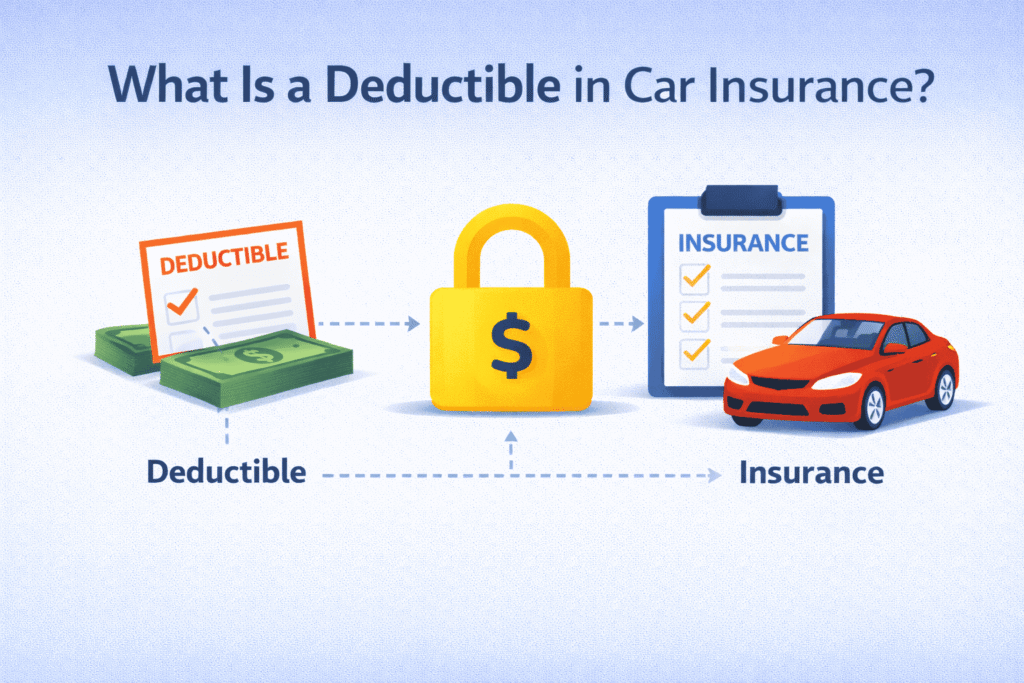
Many drivers see the word deductible on their car insurance policy but are not fully sure what it means. A common question comes up after an accident: “Why do I still have to pay part of the cost if I have insurance?” That is where the deductible comes in.
A deductible is one of the most important parts of a car insurance policy, yet it is often misunderstood. It affects how claims work, when insurance pays, and how much responsibility the driver has after an incident. If you want to see the bigger picture, review the car insurance claims process.
In this article, you’ll learn what a car insurance deductible is, how it works in real situations, which types of coverage usually include deductibles, and common misunderstandings about this concept. The goal is to explain deductibles in clear, simple terms so you know what to expect before and after a claim.
What Is a Car Insurance Deductible?
A car insurance deductible is the amount of money the policyholder is responsible for paying before insurance coverage applies to a covered claim.
In simple terms, it is the portion of the loss that you pay yourself. After you pay the deductible, the insurance covers the remaining eligible costs, according to the policy terms and policy limits.
For example, if your policy includes a deductible and your vehicle is damaged in a covered accident, you pay the deductible first. Insurance then applies to the rest of the covered damage.
A deductible does not apply to every type of car insurance coverage. Whether it applies depends on the type of coverage involved.
How a Deductible Works in Practice
A deductible comes into play only when a covered claim is made.
Here is how it usually works step by step:
- A covered incident occurs
This could be an accident, theft, or another insured event. - Damage or loss is evaluated
The total covered cost is determined based on the policy. - The deductible is applied
The policyholder pays the deductible amount. - Insurance coverage applies
After the deductible is paid, insurance covers the remaining eligible amount.
If the total cost of damage is less than or equal to the deductible, insurance typically does not make a payment.
Which Types of Coverage Have Deductibles?
Not all car insurance coverages use deductibles. Some commonly do, while others usually do not.
Collision Coverage
Collision coverage almost always includes a deductible. It applies when your vehicle is damaged in a crash with another vehicle or object. For a clear comparison, see collision vs comprehensive.
Comprehensive Coverage
Comprehensive coverage also usually includes a deductible. It applies to non-collision events such as theft, fire, vandalism, or certain weather-related damage. Learn more about comprehensive coverage and what it typically includes.
Liability Coverage
Liability coverage does not usually have a deductible. It applies to damage or injuries you cause to others and typically pays up to the policy limits without a deductible. If you’re comparing policy types, see liability vs full coverage.
Medical Payments or Personal Injury Protection
These coverages may or may not include deductibles, depending on state laws and policy terms.
When You Have to Pay a Deductible
You usually pay a deductible when:
- You file a claim under collision or comprehensive coverage (this depends on what car insurance covers on your policy)
- The claim is approved as covered
- The damage exceeds the deductible amount
You generally do not pay a deductible for:
- Liability claims involving other people
- Claims that are not covered by the policy
- Situations where no claim is filed
Deductibles apply per claim, not per policy period.
What Affects Deductible Decisions?
Several factors influence how deductibles are set and used:
- Type of coverage
- Policy structure
- State insurance rules
- How claims are handled
- The driver’s financial responsibility
A deductible represents shared responsibility between the driver and the insurance coverage.
Common Questions and Misunderstandings
Is a deductible paid every month?
No. A deductible is only paid when a covered claim occurs.
Do I pay a deductible if I am not at fault?
It depends on the coverage and how the claim is handled. If you disagree with how a claim was handled, you may be able to dispute a claim decision.
Does liability insurance have a deductible?
In most cases, no.
Is the deductible paid to the insurance company?
It is usually paid as part of the repair or claim process.
Important to Know
Car Policy Answers is an independent educational website. We do not sell insurance, provide quotes, or recommend insurance companies.
The information in this article is intended for general educational purposes only and is based on publicly available insurance guidelines and common industry practices.