
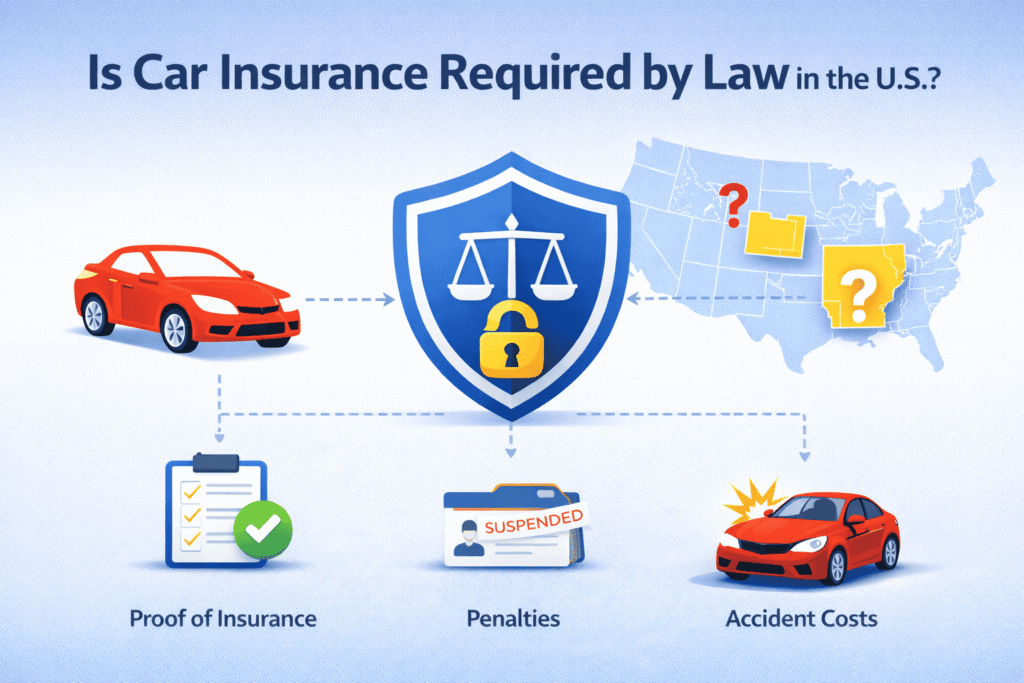
Is car insurance required is one of the most common questions drivers ask in the United States. The answer sounds simple, but it depends on your state and your situation. Many people assume insurance is optional if they drive carefully, while others think every type of coverage is required by law.
If you want a simple overview first, start here: What Is Car Insurance and How Does It Work?.
Car insurance laws exist to protect drivers, passengers, and the public from financial harm after accidents. Because insurance rules are set at the state level, requirements can vary from one state to another. That difference is a major reason people get confused—especially new drivers or anyone moving to a different state.
In this guide, you’ll learn is car insurance required by law in most states, which coverages are commonly mandatory, how state rules differ, and what can happen if you drive without the required financial protection. This is general educational information, not legal advice.
Is car insurance required by law in the U.S.?
In most U.S. states, some form of car insurance is required by law to legally drive on public roads. These laws are meant to make sure drivers can pay for injuries or property damage they may cause to others.
However, requirements are not identical everywhere. Each state sets its own rules, including:
- Which coverage types are required
- The minimum coverage limits
- How proof of coverage must be shown (paper card, digital card, electronic verification)
- Whether alternatives to traditional insurance are allowed
A small number of states allow alternatives to traditional insurance, but they still require financial responsibility. That means even if insurance is not required in a specific form, you usually must prove you can pay for damages if you cause a crash.
How car insurance requirements work in real life
Car insurance laws show up at several points in everyday driving. This is how they often work in practice:
- Vehicle registration
Many states require proof of insurance before you can register a vehicle or renew registration. - Driving on public roads
If your vehicle is registered and used on public roads, you usually must keep coverage active. - Traffic stops
Drivers may be asked to show proof of insurance during a stop. - After a crash
Insurance information is often required when exchanging information and filing reports. - State verification checks
Some states regularly verify insurance status electronically.
If a policy lapses or is cancelled, consequences may follow quickly, including registration or license issues, depending on the state.
What coverage is typically required by law?
When people ask is car insurance required, they are usually asking about the minimum legal coverage. The most common required coverage is liability insurance, but some states require additional coverages.
Liability insurance (most common requirement)
Liability insurance helps pay for injuries or property damage you cause to others in an accident. It typically includes:
- Bodily injury liability (injuries to other people)
- Property damage liability (damage to vehicles or property)
Liability coverage generally does not pay to repair your own car. Required limits vary by state.
No-fault states and PIP requirements
Some states use no-fault rules for injuries. In those states, drivers may be required to carry Personal Injury Protection (PIP) or similar coverage to help pay medical expenses regardless of fault.
Uninsured/underinsured motorist coverage (required in some states)
In certain states, drivers are also required to carry uninsured or underinsured motorist coverage. This can help protect you if you are hit by a driver who has no insurance or not enough insurance.
Other coverages like collision and comprehensive are usually not required by state law. However, a lender or leasing company may require them if you finance or lease your vehicle.
States with alternatives to traditional car insurance
A small number of states allow alternatives to traditional insurance in limited situations. Examples may include:
- Posting a surety bond
- Making a cash deposit with the state
- Applying for self-insurance (often for fleets or very specific cases)
These options usually require proof you can pay for damages yourself. Even in these states, driving with no financial responsibility is typically not allowed.
What happens if you drive without required insurance?
Driving without required coverage can create serious legal and financial consequences. While penalties vary by state, common outcomes include:
- Fines or penalties
- License suspension
- Vehicle registration suspension
- Fees to reinstate driving privileges
- Personal responsibility for accident costs (repairs, injuries, legal claims)
Even if an accident is minor, driving uninsured can turn a manageable situation into a major financial problem.
For a detailed breakdown, see Driving Without Insurance: 10 Things That Can Happen.
Common questions and misunderstandings
Is full coverage required by law?
No. “Full coverage” is not an official legal term. Most state laws focus on liability (and sometimes additional required coverages).
Is car insurance required if I don’t drive often?
In many states, insurance is required as long as the vehicle is registered and used on public roads. Rules vary, so check your state’s requirements.
Does insurance follow the driver or the car?
In many cases, insurance follows the vehicle, but permission and household rules can affect coverage depending on the policy.
Is car insurance required on private property?
Insurance laws usually apply to public roads. However, accidents on private property can still create liability and financial responsibility issues.
Important to Know
Car Policy Answers is an independent educational website. We do not sell insurance, provide quotes, or recommend insurance companies.
This article is intended for general educational purposes only. Insurance laws and requirements vary by state and can change over time.