
Introduction
What is car insurance is a question many drivers ask, even if they have had a policy for years. In the United States, insurance is often required to drive legally, but people still wonder what it actually pays for, when it applies, and why some claims are approved while others are denied.
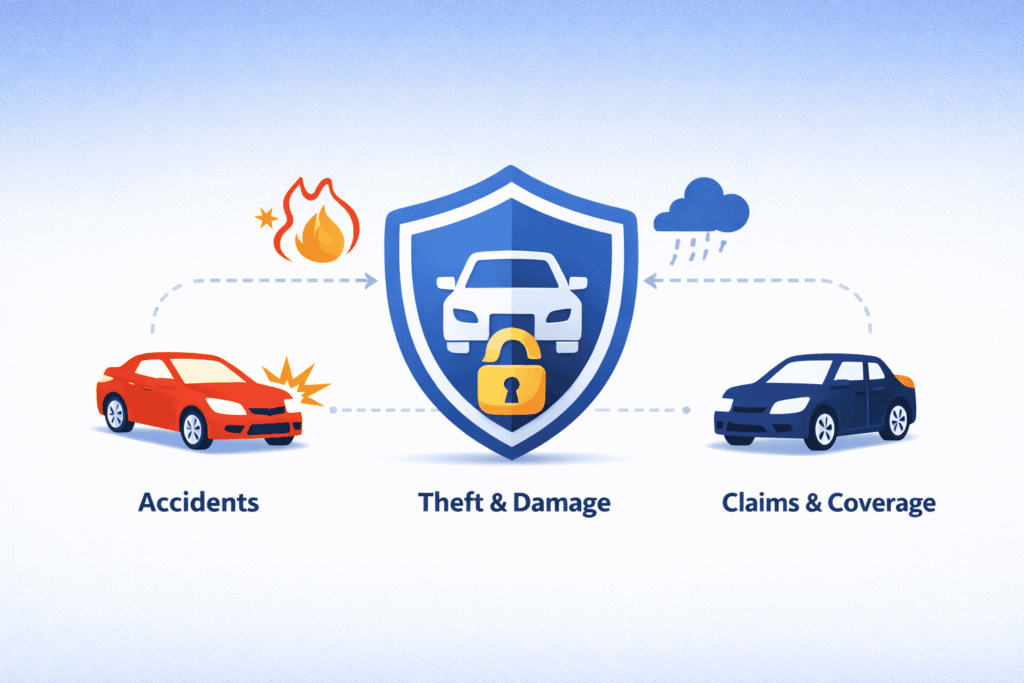
Car insurance is designed to protect you financially when unexpected events happen—like a crash, theft, or major vehicle damage. Instead of paying the full cost out of pocket, you pay premiums and the policy may help cover certain losses when the situation matches the coverage you chose.
In this article, you’ll learn what is car insurance, how it works step by step, the main types of coverage, what affects claim decisions, and common misunderstandings. The goal is clear, simple information you can use to understand your policy in real life.
What is car insurance?
Car insurance is a legal and financial agreement between a vehicle owner (or driver) and an insurance company. You agree to pay for the policy and follow certain rules. In return, the insurer agrees to help pay for specific losses related to driving or owning the car—based on the coverages listed in the policy.
In simple terms, what is car insurance really about? It is a way to manage risk. Accidents and damage can be expensive. Insurance spreads those costs across many policyholders, so one person is not stuck paying the full cost of a major unexpected event alone.
Example: If you cause an accident that damages another car, your policy may help pay for repairs or injuries (depending on your liability coverage and limits). Without insurance, you might have to pay those costs yourself.
Car insurance does not cover everything. What is paid, when it applies, and who is protected depends on the coverage types you carry, your limits, your deductible (when applicable), and the details of the incident.
How car insurance works in practice
While details vary by insurer and state, the basic claim process tends to follow the same pattern. Understanding these steps helps explain why coverage decisions can differ from one incident to another.
Here is how car insurance usually works in practice:
- You choose coverage
When you start a policy, you select coverage types and limits. Some coverages are required by law in many states, while others are optional. - You agree to the policy terms
The policy explains what is covered, what is excluded, and your responsibilities (for example, reporting an accident and cooperating with the investigation). - You keep the policy active
As long as premiums are paid and the policy is not cancelled, coverage stays in effect. - An incident happens
This could be a crash, theft, vandalism, or another covered event. - You file a claim
You report what happened and provide details (photos, a timeline, report number, and repair estimates when needed). - The claim is reviewed
The insurer checks the facts and compares them to your policy coverages, limits, deductibles, and exclusions. - Payment or repairs are handled
If approved, payment is made according to the policy terms. Deductibles and limits may reduce what is paid.
This is why the answer to what is car insurance is not just “it pays for accidents.” It pays only for covered situations, and the policy rules determine how much and when.
Main types of car insurance coverage
Auto policies usually include a mix of coverages. Each one protects against different risks, and each one has limits and conditions.
Liability coverage
Liability coverage helps pay for injuries or property damage you cause to others. It generally does not pay to repair your own vehicle. Liability coverage is required in most U.S. states, but minimum limits vary.
Collision coverage
Collision coverage can help pay for damage to your own car after a crash, regardless of who caused it. Collision often includes a deductible, meaning you pay part of the covered cost before insurance pays the rest.
Comprehensive coverage
Comprehensive coverage can help pay for non-collision damage, such as theft, fire, vandalism, falling objects, and certain weather-related losses. Comprehensive also commonly includes a deductible.
Medical Payments (MedPay) or Personal Injury Protection (PIP)
These coverages can help with medical expenses for you and your passengers after an accident. What is included depends on your state and policy terms.
Uninsured or underinsured motorist coverage
This coverage can help protect you if the at-fault driver has no insurance or not enough insurance. Depending on the policy, it may apply to injuries, vehicle damage, or both.
To fully understand what is car insurance on your policy, the best place to look is your declarations page (“dec page”), which lists your coverages, limits, and deductibles.
What affects car insurance decisions and claim outcomes?
Insurance decisions are based on policy language and the facts of the incident. While people often focus on cost, it also helps to understand what affects how coverage applies and whether a claim is paid.
Common factors include:
- State insurance requirements
- Coverage types selected
- Coverage limits and deductibles
- How the vehicle is used (personal vs. business use, depending on the policy)
- Driving history and claim history
- Whether the vehicle is owned, financed, or leased (lenders may require certain coverages)
These factors shape what coverages apply and how much protection you have when something goes wrong.
Common questions and misunderstandings
Does car insurance cover every accident?
No. Coverage depends on the coverage types you carry and the details of the situation. Some events may be excluded.
Does insurance cover mechanical problems?
Usually no. Mechanical failures and routine maintenance are not typically covered because they are not sudden accidental losses.
Is insurance only for bad drivers?
No. Insurance exists to protect all drivers from large, unexpected financial losses—even careful drivers can be involved in a crash or experience theft or weather damage.
Does “full coverage” mean everything is covered?
No. “Full coverage” is not an official legal term and policies still have limits, deductibles, and exclusions.
Understanding what is not covered is just as important as understanding what is covered.
Important to Know
Car Policy Answers is an independent educational website. We do not sell insurance, provide quotes, or recommend insurance companies.
This article is intended for general educational purposes only. Insurance laws and coverage requirements vary by state, and the facts of a claim matter.